
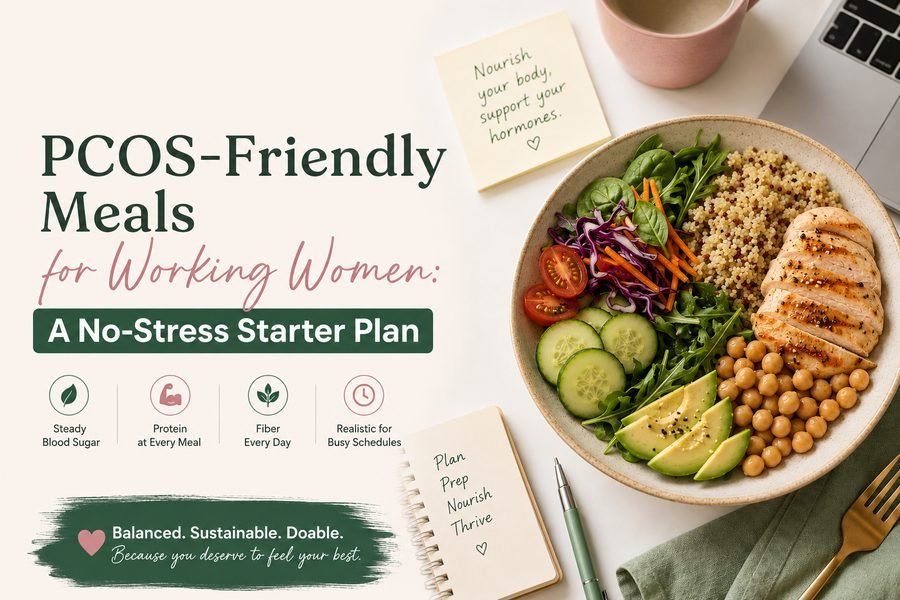
Search "PCOS diet" and you'll find a battlefield: keto versus low-GI versus dairy-free versus gluten-free, each promising to be the answer. Here's what the research actually supports: there is no single mandatory PCOS diet. What consistently helps is a way of eating that keeps blood sugar steady, provides enough protein and fiber, and — critically — is one you can keep doing during your busiest month, not just your most motivated week.
This is your starter plan. It's built for women with jobs, commutes, and approximately zero desire to spend Sunday batch-cooking twelve containers of chicken.
The one principle behind every meal
Since most women with PCOS have some insulin resistance, the aim is meals that release glucose slowly rather than in spikes. Three levers do most of the work:
- Protein at every meal — steadies blood sugar and keeps you full for hours.
- Fiber with every carb — vegetables, legumes, and whole grains slow absorption.
- Fat as a supporting act — olive oil, nuts, seeds, avocado add satisfaction and slow digestion.
Breakfasts that don't spike you by 10 a.m.
The classic mistake is a carb-only breakfast — toast, cereal, or just coffee — which sets up a blood sugar rollercoaster for the whole day. Swap in one of these:
- Greek yogurt bowl — plain yogurt, berries, chia or flaxseed, a few walnuts. Two minutes, zero cooking.
- Eggs any style + vegetables — an omelet with spinach and tomatoes, or boiled eggs prepped the night before with fruit.
- Savory overnight oats — oats soaked in milk with protein powder or yogurt stirred in, topped with seeds. Grab-and-go.
- Leftovers. Seriously — last night's protein and vegetables are a perfect breakfast. No rule says breakfast must be "breakfast food."
Desk lunches (bought or brought)
The goal at lunch is avoiding the 3 p.m. crash. Whether you pack or order, run the plate check:
- If you pack: a grain bowl formula — base of greens plus a small portion of quinoa or brown rice, a generous protein (chickpeas, grilled chicken, tuna, paneer), colorful vegetables, olive-oil dressing.
- If you order: choose the protein-forward option and add a side of vegetables; ask for dressing on the side; make grains or bread the smallest thing on the plate, not the biggest.
- Emergency desk kit: keep nuts, roasted chickpeas, or protein bars in a drawer so a skipped lunch doesn't become a vending-machine dinner.
20-minute dinners
Evening decision fatigue is real. The fix is a rotation of three to four "house dinners" you can make on autopilot:
- Sheet-pan anything: protein plus two vegetables, olive oil, spices, one pan, 20 minutes at high heat.
- 10-minute stir-fry: frozen vegetable mix, any protein, garlic-ginger-soy, served over a modest portion of rice.
- Hearty lentil or bean bowls: daal with a big vegetable side, or a black-bean bowl with avocado — fiber and protein in one pot.
- Upgraded eggs: a vegetable-loaded frittata or shakshuka with a slice of whole-grain bread. Dinner-worthy, 15 minutes.
Your first week, made simple
- Pick two breakfasts from above and alternate them all week.
- Decide your lunch default — one packed formula, one order-out choice.
- Choose three house dinners and shop for them once.
- Add a 10-minute walk after your largest meal.
That's it. Not a diet — a rhythm. Once it feels boring (that's the goal), you can layer in variety.
The takeaway
Eating for PCOS is not about restriction; it's about composition and consistency. Build steady-blood-sugar meals from foods you already like, repeat them without guilt, and let the compounding effect do its work — on your energy first, and over time, on your hormones.
Want this as a ready-made plan? The free PCOS Kickstart Guide includes a 7-day meal framework and shopping list.